
Blocks, Slopers, and Sewing Patterns: What’s the Difference?
A self-taught drafter’s guide to finally understanding blocks, slopers, and patterns

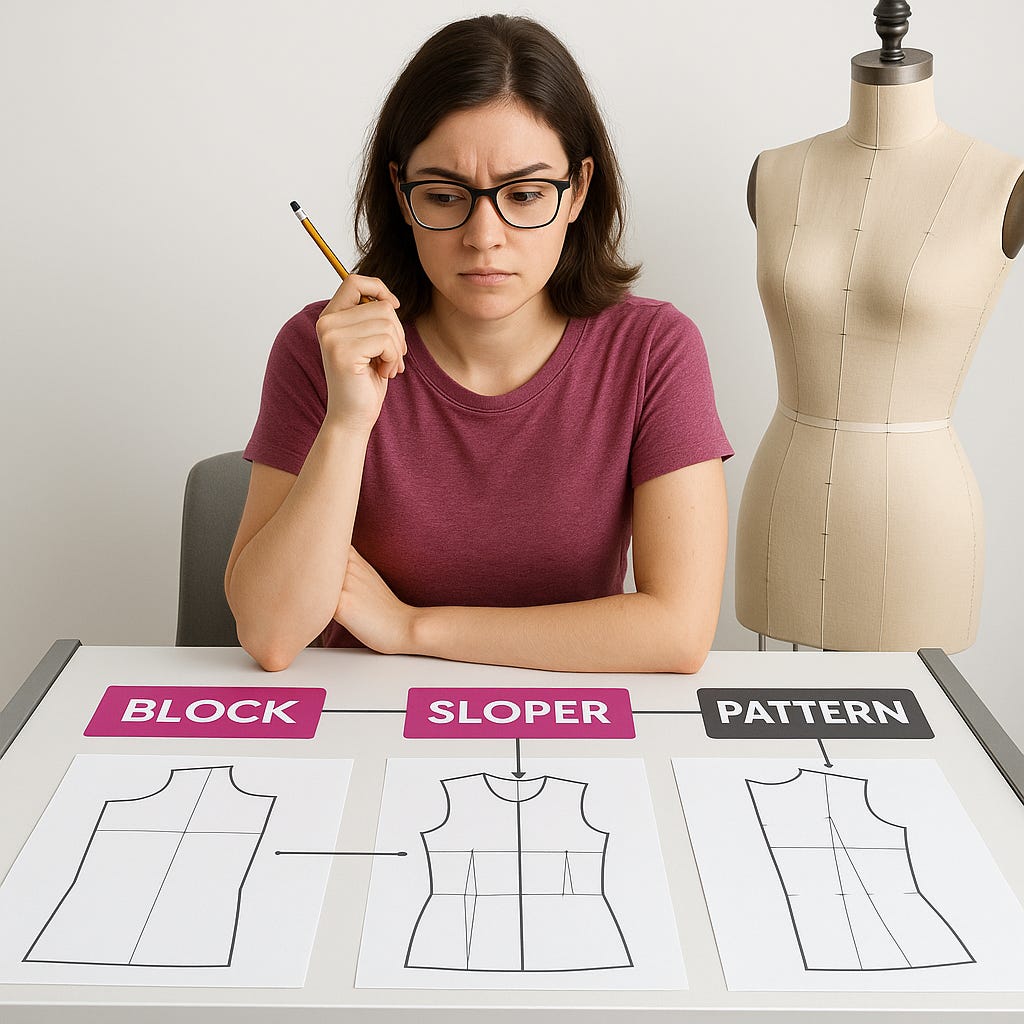
A recent customer question about ease in my Basic Pattern Set brought to mind a post I shared with my social media audience a few years back about the fundamental differences between blocks, slopers, and sewing patterns. I realized my Substack readers could really benefit from revisiting those insights.
Because when someone says their bodice block feels "skin-tight," that's not a problem, it's exactly what a proper block should do.
When I first started teaching myself pattern drafting, I’d see the words sloper and block in tutorials and immediately feel my brain shut down.
Were they the same thing? Different? Did I need them? Could I just… ignore them?
Spoiler: I tried ignoring them. For months, I told myself they were just fancy terms for people who went to fashion school. In my mind, everything was just “patterns,” and that was that.
But here’s the truth, once I finally understood what these terms meant, my entire drafting process became so much easier. It was like someone had handed me a map after I’d been wandering lost in the woods.
If you’re feeling that same confusion, let me save you the months of unnecessary struggle I went through.
Sewing Patterns: The One You Already Know
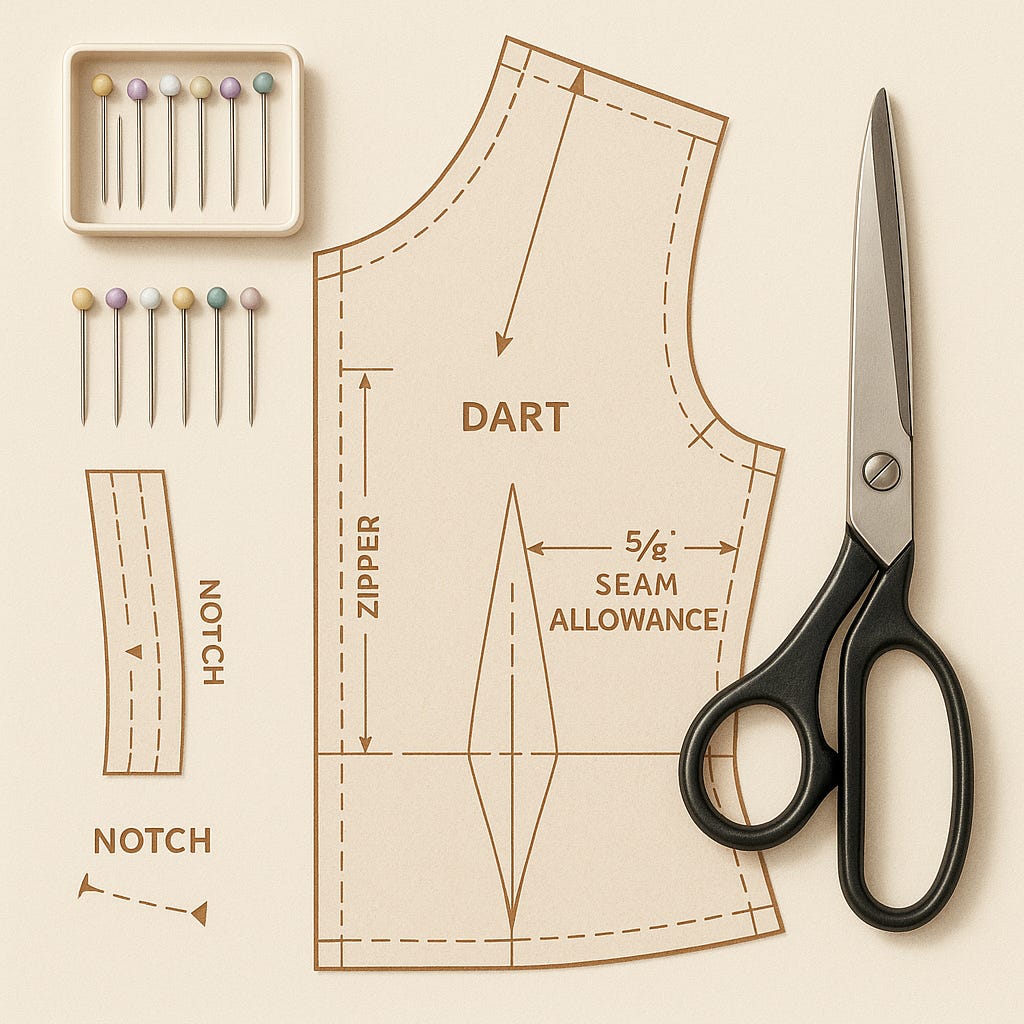
A sewing pattern is what most of us are familiar with, it's a garment drafted on paper using measurements (whether standard or custom). When you buy a pattern from the store or download one online, this is what you're getting.
The key thing about sewing patterns? They include EVERYTHING you need to actually sew the garment:
Seam allowances
Zipper allowances
Ease allowances
Design ease
Notches
All those mysterious marks and lines
Think of a sewing pattern as the ready-to-go version. You place it on your fabric, cut, and sew. Simple.
Now, Here's Where It Gets Interesting: Slopers
A sloper is completely different, and understanding this difference was my "aha!" moment.
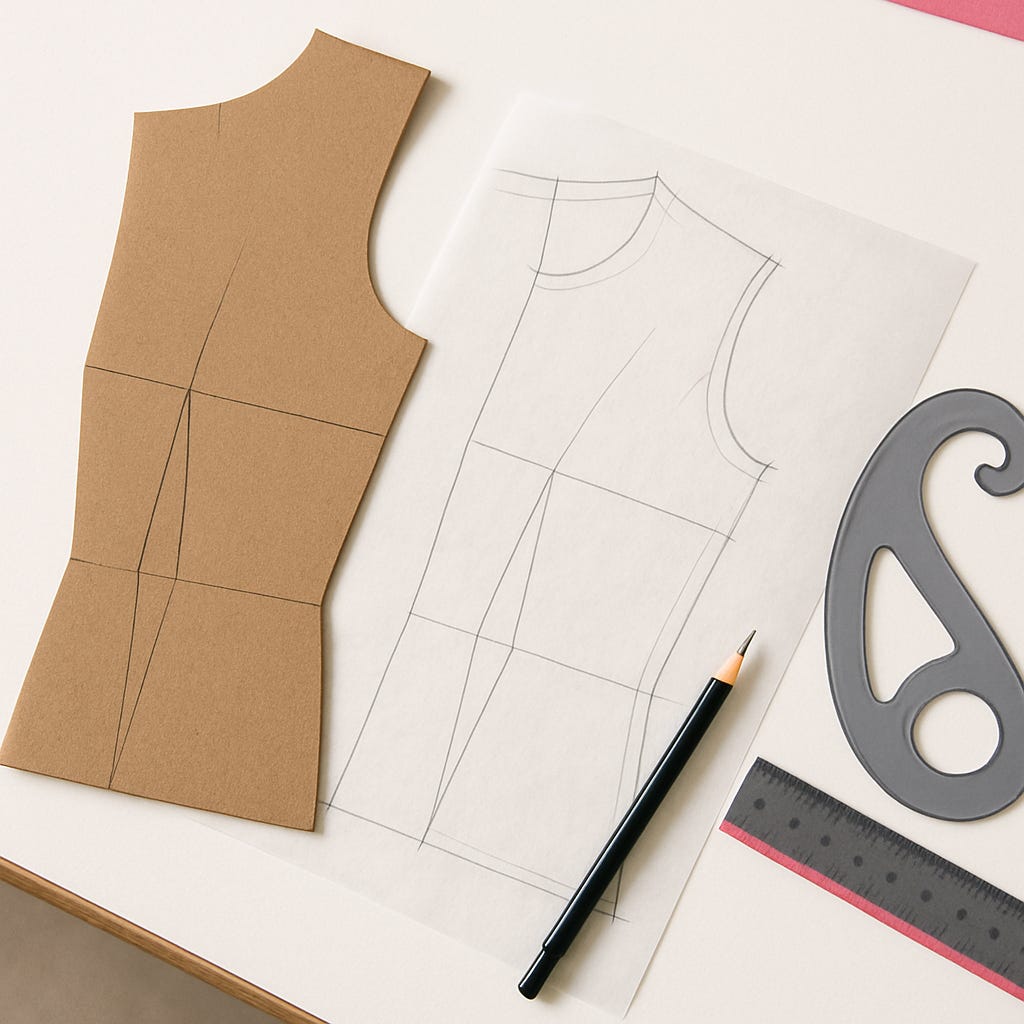
A sloper is your EXACT measurements drafted on paper—no seam allowances, no ease, no extras. Just the pure, basic shape of your body (or a standard size) captured on paper.
Here's the game-changing part: slopers are typically made on sturdy cardboard and kept as permanent templates. Why? Because instead of drafting from scratch every single time you want to make something new, you simply:
Pull out your sloper
Trace it onto fresh paper
Add whatever you need for that specific project (seam allowances, design details, etc.)
Create your sewing pattern from there
Think of a sloper as your personal template library. Once you have them, you never have to draft those basic shapes from scratch again. It's like having the foundation of a house that you can build different styles on top of.
Plot Twist: Blocks ARE Slopers
Here's something that confused me for the longest time: a block is just another name for a sloper.
Block = commonly used in Australia and the UK
Sloper = commonly used in the United States
Same concept, different regional terminology. If you've been seeing both terms and wondering what the difference is, there isn't one! Mystery solved.
The Three You Actually Need
Once you understand what blocks/slopers are, the next question is: which ones do you actually need?
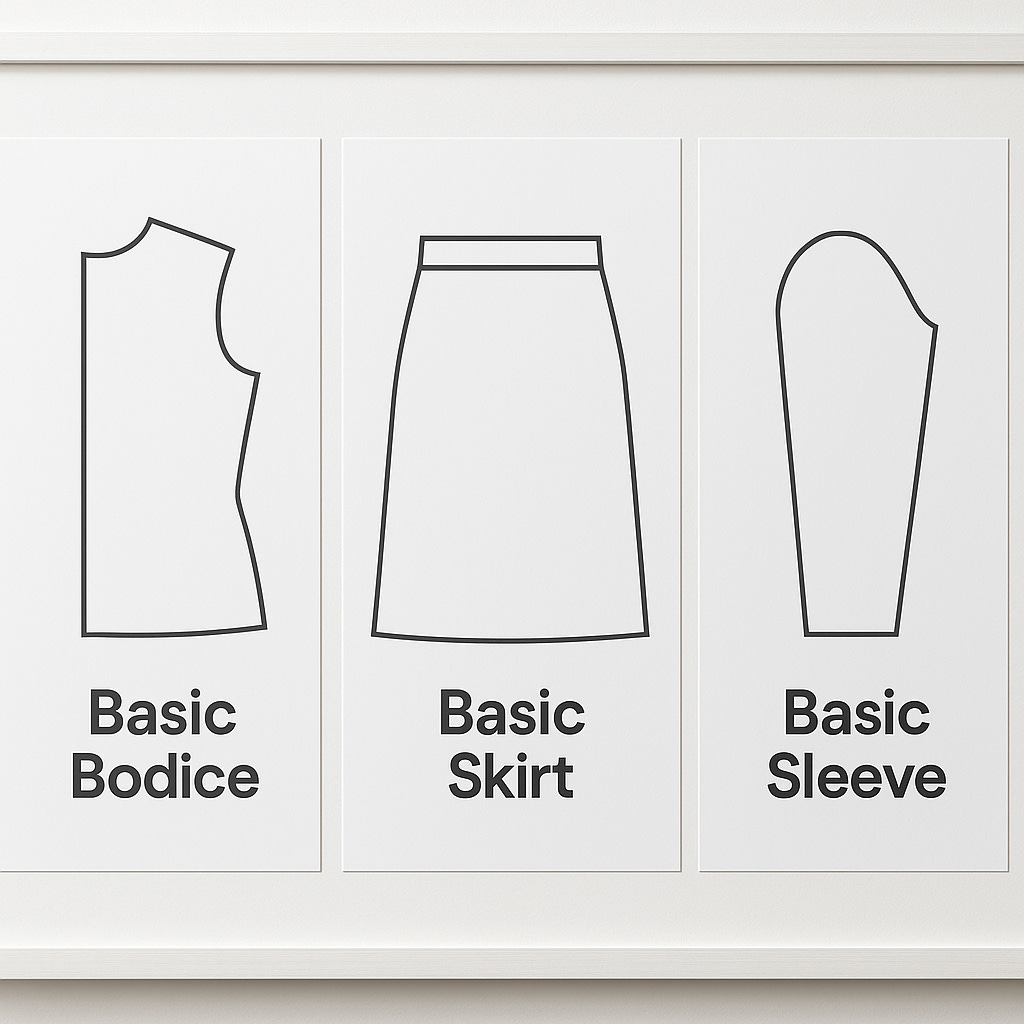
The Basic Block Set (or Basic Sloper Set) consists of three fundamental pieces that form the foundation for almost every garment you'll ever make:
The Basic Bodice - your upper body foundation
The Basic Skirt - your lower body foundation
The Basic Sleeve - because arms need clothes too
With these three blocks/slopers, you can create endless variations.
Want a fitted dress? Combine and modify the bodice and skirt blocks.
Need a jacket? Start with the bodice and sleeve blocks and add your design elements.
Why This Matters for Self-Taught Drafters
When you're teaching yourself pattern drafting, it's easy to feel like you're missing some secret knowledge that "real" pattern makers have. But honestly? Understanding these basic terms and concepts IS that secret knowledge.
Once you have your basic blocks/slopers made:
You save hours of drafting time on every project
Your fit becomes more consistent
You can focus on the creative design aspects instead of redrafting basics
You build confidence because you're working from a proven foundation
Ready to Build Your Foundation?
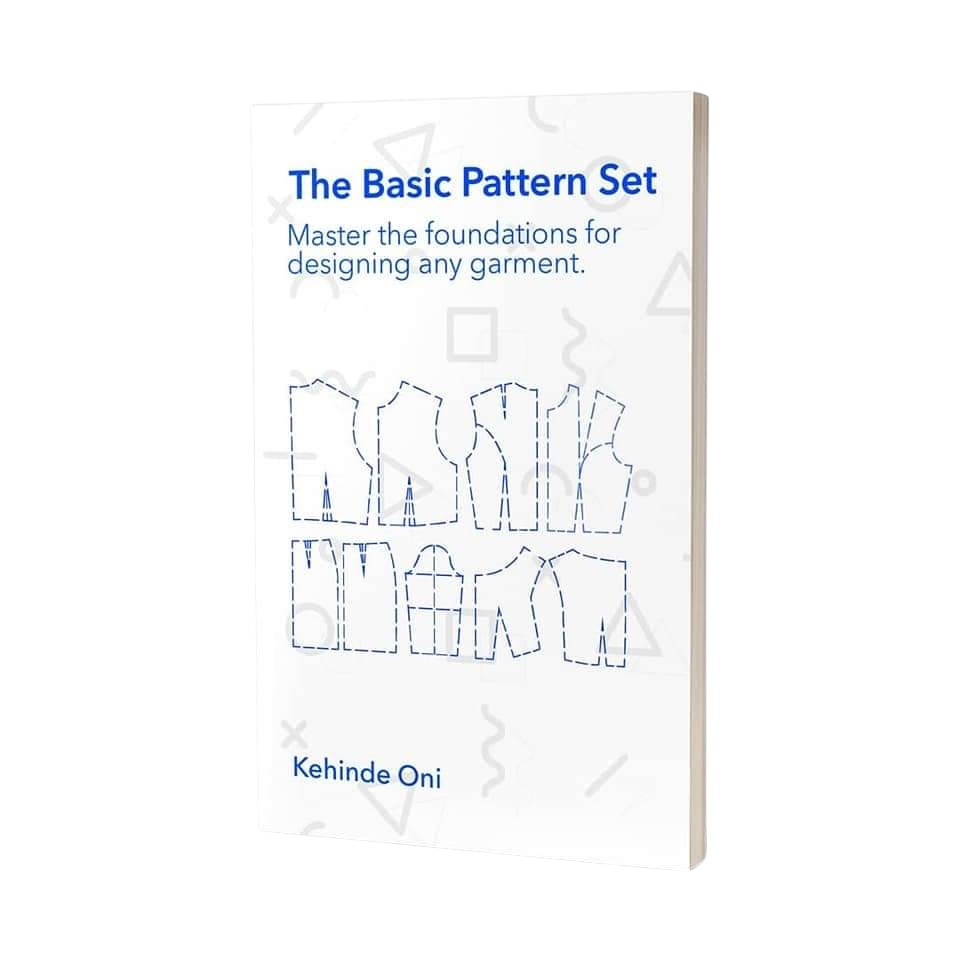
If you’ve been feeling lost in the terminology, or tired of redrawing basics from scratch—remember, you only need three blocks to start.
That’s exactly why I wrote my ebook The Basic Pattern Set. It walks you step by step through drafting the bodice, skirt, and sleeve blocks—your foundation for everything you’ll make after.
👉 [Get your copy here] and create your own blueprint set. Once you have these blocks, the confusion melts away and the fun begins.
💬 Your turn: Did you ever get stuck on confusing drafting terms when you were learning? Drop a comment, I’d love to know I wasn’t the only one!