
Why I Started with The Basic Pattern Set Before Seamly2D (And Why You Should Too)

Something happened yesterday that made me realize I need to share this more clearly.
Someone commented on my post saying she wanted to learn pattern adapting but didn’t understand the fundamentals. I recommended The Basic Pattern Set, and she bought it.
Then she said something that clicked for me:
“I’m just guessing based on limited experience.”
That’s the gap.
Here’s What I’m Learning About Seamly2D
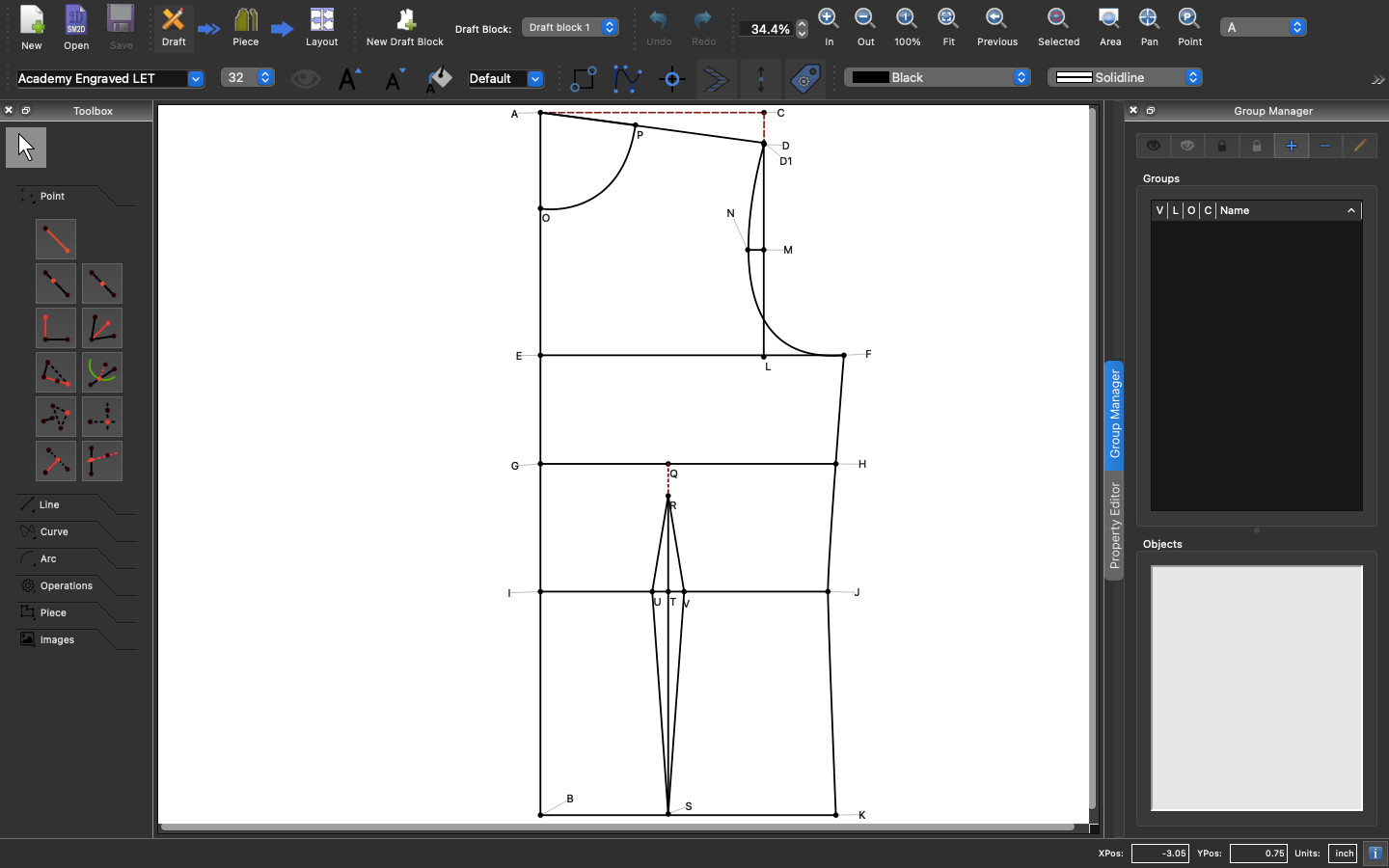
I’m a week into learning Seamly2D now, drafting blocks digitally.
And here’s the truth: The software is just a tool. You still need to understand what you’re building.
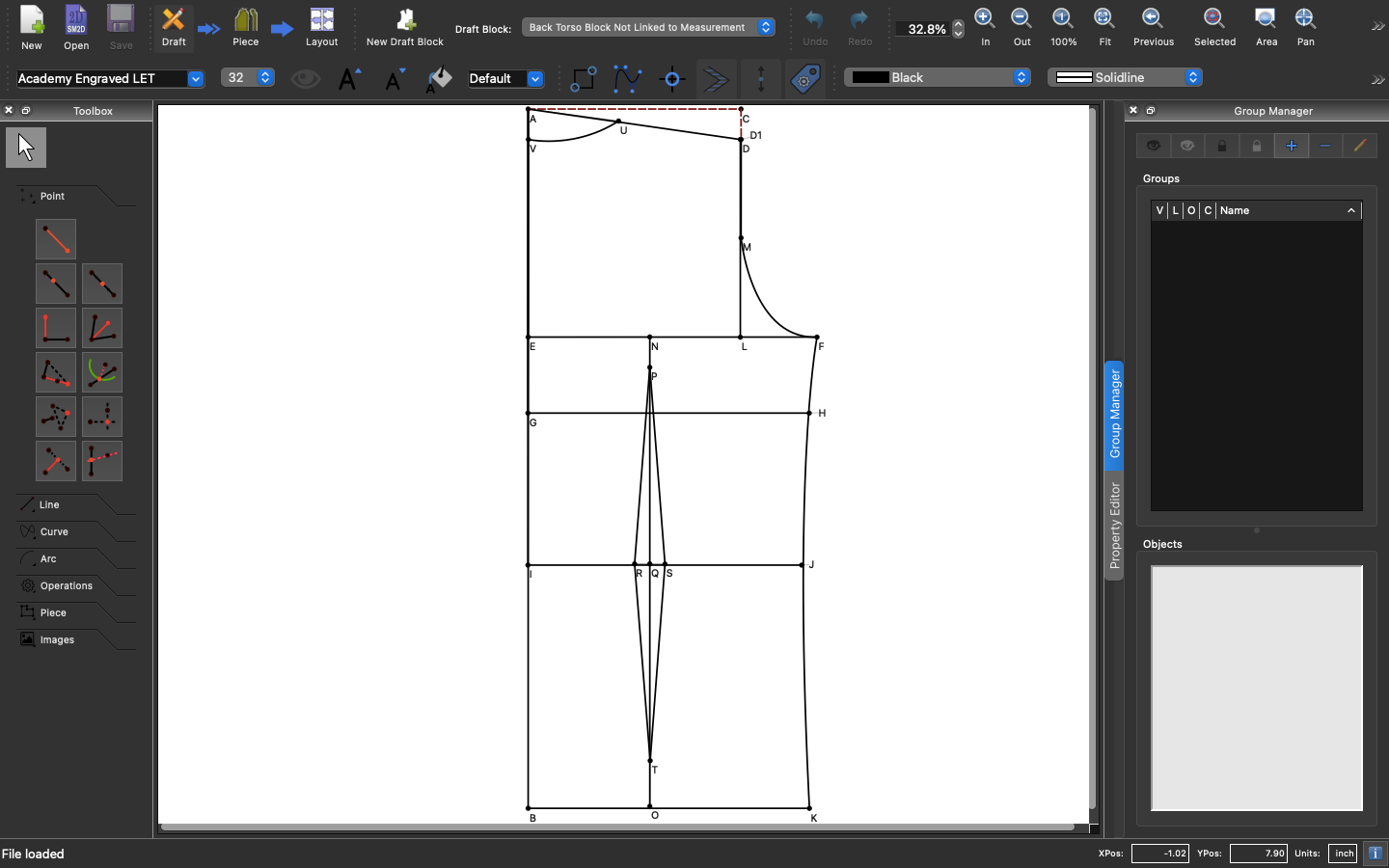
When I drafted The Basic Pattern Set blocks in Seamly2D, it was straightforward. Almost intuitive.
Why?
Because the instructions in the book already simplified the drafting logic:
Clear measurement relationships
Alphabetical point labeling (A, B, C...)
Sequential construction order
Formula-based calculations
Seamly2D just executed what the book already taught me to understand.
Then I Tried a Different Method
Now I’m drafting pants using different instructions—numbered points instead of letters, different construction logic.
And it’s harder.
Not because Seamly2D is difficult, but because I have to translate between two different systems:
The instruction’s numbering (1, 2, 3...)
Seamly2D’s letter requirement (A1, A2, A3...)
It’s teaching me something important: The tool is only as good as your understanding of what you’re trying to create.
What This Means If You Want to Learn Seamly2D
You have two options:
Option 1: Learn pattern drafting AND software simultaneously
You’re learning two things at once
Every friction point compounds
You don’t know if the problem is your understanding or the software
Option 2: Learn pattern principles first, then apply them digitally
You understand WHAT you’re building
The software becomes an execution tool, not a mystery
When something doesn’t work, you can diagnose why
I accidentally did Option 2 by writing The Basic Pattern Set before discovering Seamly2D.
That’s why drafting those blocks digitally was smooth; I already understood the logic.
The Foundation You Actually Need
The Basic Pattern Set teaches:
How to take accurate measurements
How blocks are constructed (and why in that order)
What formulas do (not just which ones to use)
Where darts go and why they’re there
How ease works and when to add it
These principles don’t change whether you’re drafting on paper or digitally.
Paper or digital = execution method
Understanding the logic = the actual skill
Once you have that foundation, Seamly2D becomes powerful. You’re telling the software what to do because you understand what needs to happen.
Without it, you’re copying steps you don’t understand.
My Recommendation
If you’re serious about learning Seamly2D:
Start here: The Basic Pattern Set
Draft the blocks on paper first (or follow along digitally if you already have Seamly2D).
Why?
The instructions are designed to be clear and repeatable
Alphabetical labeling matches Seamly2D’s system
You’ll understand WHY each line goes where it does
When you transition to digital, you’ll know what you’re building
Then: Apply that knowledge in Seamly2D
Use the formulas you learned. Input the measurements. Watch the pattern adjust parametrically.
Now the software makes sense because you understand the underlying logic.
What Happened After She Bought the Book
That commenter? She’s a professional theater costume seamstress.
Skilled, experienced, technically proficient.
But she said: “I’m just guessing based on limited experience.”
That’s not a skills problem. That’s a knowledge gap.
She can sew beautifully. She just didn’t understand pattern construction principles.
The Basic Pattern Set fills that gap.
And once she has those foundations, everything else—adapting commercial patterns, fitting muslins, eventually using Seamly2D—will make sense.
The Honest Truth
I’m not saying this because I want to sell books (though obviously I appreciate every purchase that supports this work).
I’m saying it because I’m learning Seamly2D right now, and I’m grateful I understood pattern drafting first.
It’s the difference between:
“Why won’t this work?”
“Oh, I need to adjust the formula because this relationship changed”
One is frustration. The other is problem-solving.
If You’re Ready
The Basic Pattern Set is available here:
Current price: $12 PDF / $9.99 Amazon
What’s coming: I’m updating it with blocks that include ease and alternative methods. When the update launches, the price doubles. If you buy now, you get the update free.
What you’ll learn:
Basic bodice block
Basic skirt block
Basic sleeve block
Off-shoulder blouse
Princess blouse
How to take measurements
How ease works
Why darts go where they do
Simple, repeatable methods. Clear instructions. The foundation for everything else.
Then, when you’re ready for Seamly2D, you’ll have the knowledge to make it work for you.
What About You?
Are you learning Seamly2D? Have you tried jumping straight to digital without the foundational knowledge?
Or did you learn pattern drafting first and find the transition to software easier?
I’m curious about your experience.
Reply and let me know, your insights shape what I teach next.
Kehinde Oni
Pattern Maker | The Sewing Lounge
P.S. If you’re already using The Basic Pattern Set and want to learn Seamly2D, I’m documenting my learning journey publicly. Real-time notes, friction points, workarounds. You’ll see it all as I figure it out.
I learned pattern drafting first, then CAD for a different medium. Now, I need new blocks and want to get pattern drafting again, especially for designs of my own. I want to use my drafting experience to inform even the knitwear patterns I make, and improve my grading skills. There's been a little learning curve for me getting back into both technologies, but you're showing me, maybe I practice some basics on paper to get familiar measurements, then take everything to the computer.
I'm planning to practice the software on Twitch and make a couple of Youtube videos about my process. Maybe not exactly how-tos but still educational process content. Honestly, all inspired by you! Could I promote your basic block set whenever I post about this stuff?
Thank you for explaining that. This is the year I'ma learn how to do this. My mother has been sewing practically her entire life, and taught it for many years. She never uses patterns. She just measures, cuts, then sews, but my brain has never understood how she knows what shapes to cut and how to put them together, especially because I have Aphantasia. I really would love to learn to sew clothes though.