
Why I Wrote The Basic Pattern Set (And Why It Works Perfectly With Seamly2D)

I didn’t write The Basic Pattern Set thinking about digital pattern making.
I wrote it because I kept seeing the same gap in pattern-making education: people learning techniques without understanding foundations.
They’d follow tutorials for specific garments. They’d try to modify commercial patterns. They’d get frustrated when things didn’t fit. And they’d blame themselves, thinking they just weren’t good at pattern making.
But the problem wasn’t them. It was that they were building on a foundation they never learned to create.
The Gap I Saw (And Why It Matters)
Most pattern-making resources teach you what to do without teaching you why it works.
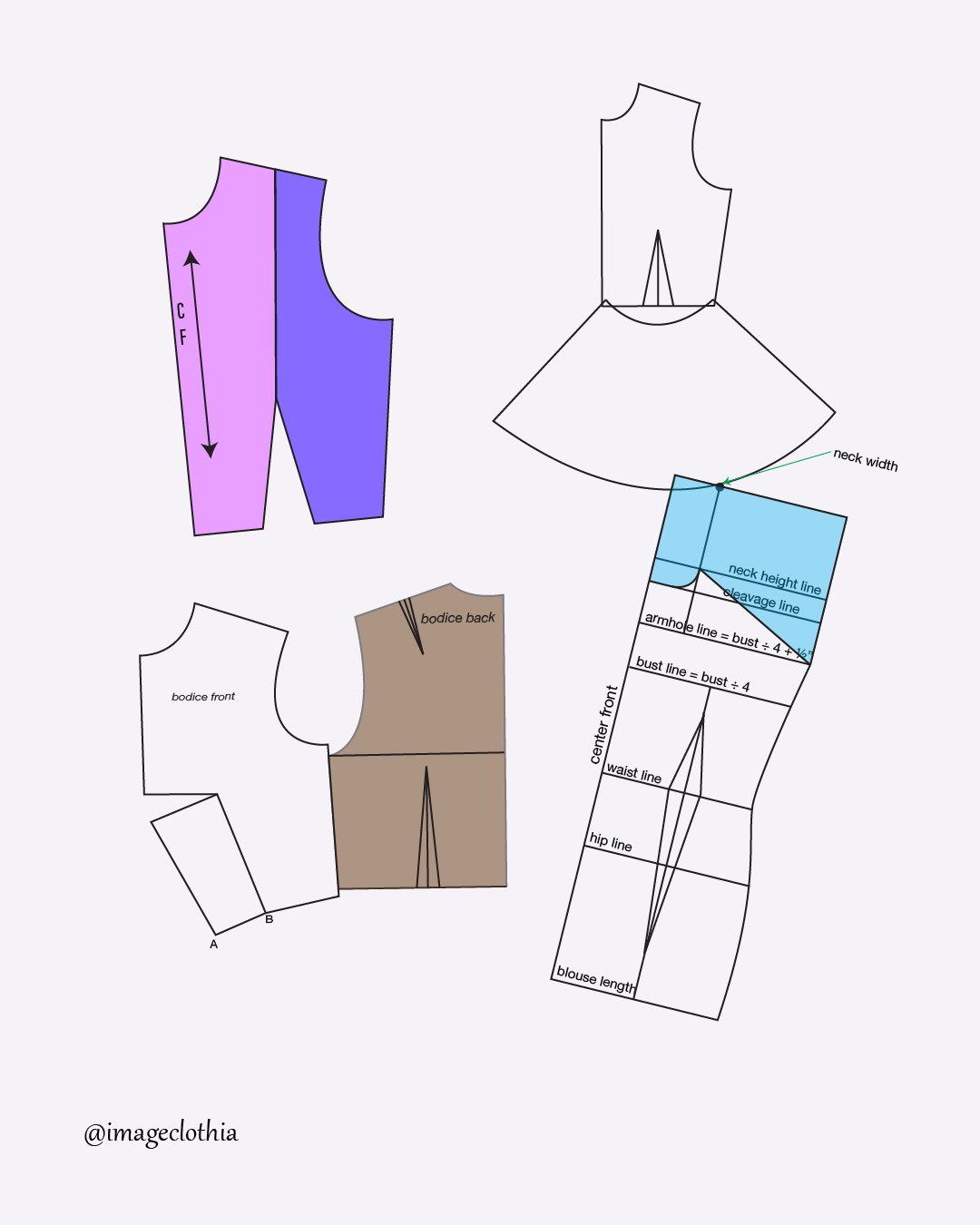
They show you how to draft a specific style—a pencil skirt, an A-line dress, a fitted bodice. But they don’t teach you the underlying structure that makes all of those styles possible.
The result?
You know how to make that one thing, but you don’t know how to create anything else. You can’t adjust for your body. You can’t design your own styles. You’re following instructions without understanding the system.
I saw this constantly, people who’d been sewing for years but couldn’t draft a basic block. People who could follow a pattern but couldn’t modify it. People who wanted to design their own clothes but didn’t know where to start.
The foundation was missing.
And without that foundation, everything else was guesswork.
What Makes The Basic Pattern Set Different
When I wrote The Basic Pattern Set, I had three non-negotiables:
1. Zero-Ease Blocks Come First
Most resources skip straight to styled patterns, garments with ease already built in, designed for a specific look.
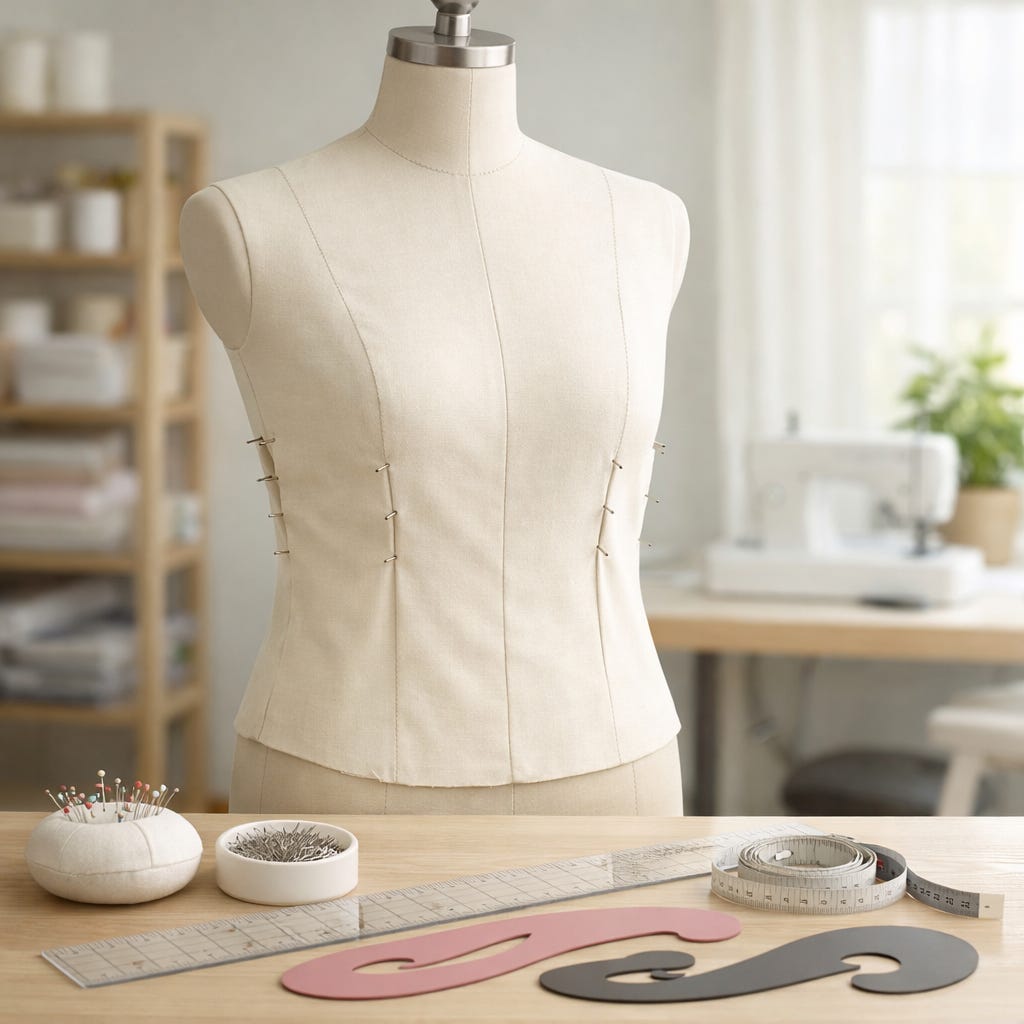
But if you don’t understand the zero-ease block (the fitted foundation that matches your exact body measurements), you can’t understand why you’re adding ease or how much ease to add for different fabrics and styles.
The Basic Pattern Set starts with zero-ease blocks for the torso, skirt, sleeve, and pants. These are your templates; the base patterns you’ll transform into every garment you ever make.
2. Alphabetical Labeling System
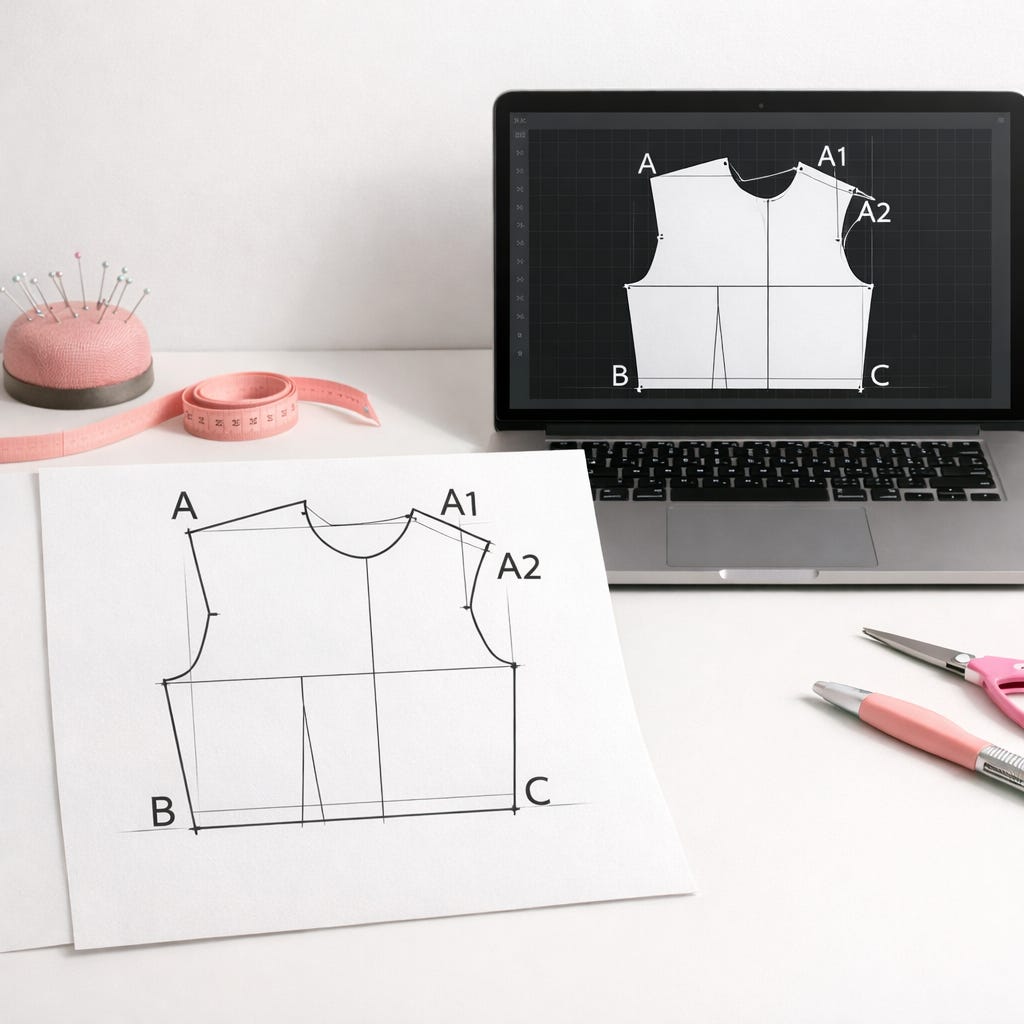
Every point on the pattern is labeled alphabetically: A, B, C, or A1, A2, A3.
I chose this system because it’s clear, sequential, and easy to follow. You draft point A, then point B, then point C. No confusion about which point connects to which.
I didn’t know at the time that this decision would matter for digital pattern making. But it does.
3. Foundations First, Transformations Second
You can’t transform a block you don’t have.
The current version of The Basic Pattern Set teaches you how to draft the foundational blocks, the starting point for everything.
Once you have those blocks, you can create endless variations. But you need the foundation first.
The Seamly2D Discovery (I Didn’t Plan This)
Here’s the thing I didn’t expect:
The Basic Pattern Set is perfectly structured for digital pattern making.
I’ve been learning Seamly2D, an open-source tool for parametric pattern drafting, and documenting the process publicly. And I keep discovering how well the book translates to digital tools.
Why?
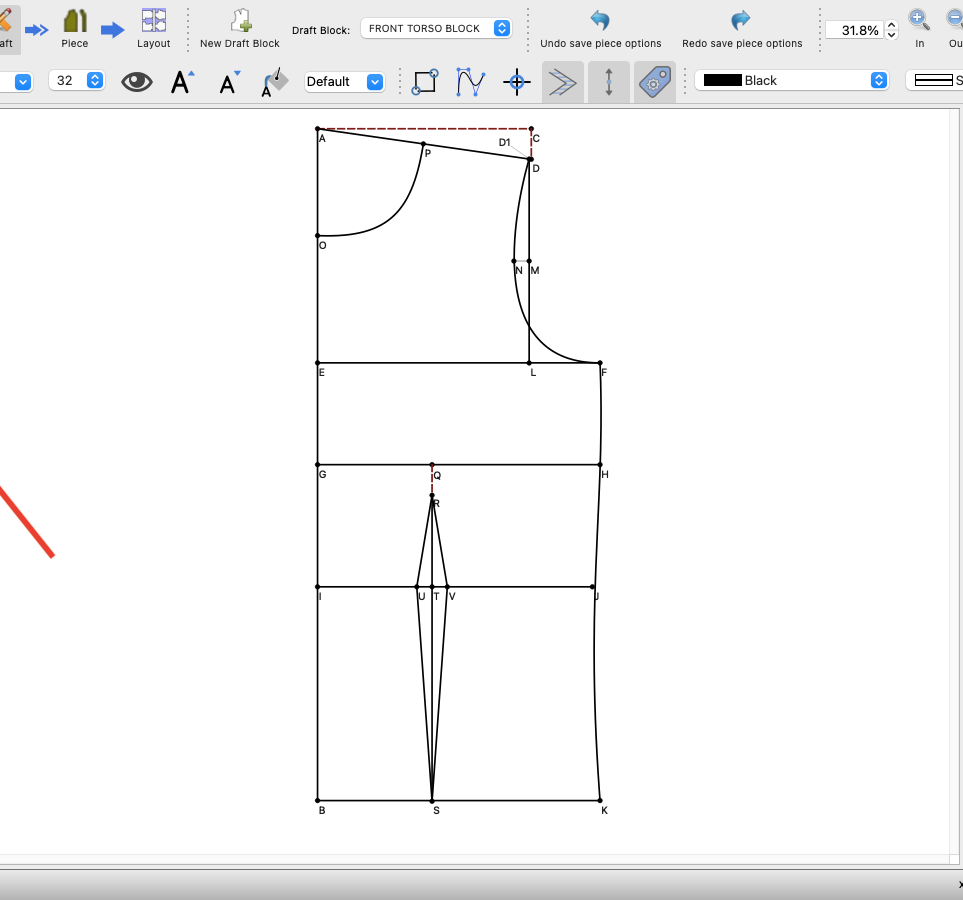
Seamly2D requires alphabetical labeling. You can’t use pure numbers, you have to label pattern points as A, B, C or A1, A2, A3.
And that’s exactly the system The Basic Pattern Set already uses.
I didn’t design the book with Seamly2D in mind. I’d never even heard of Seamly2D when I wrote it. But the alphabetical system I chose for clarity on paper happens to be the exact format digital pattern-making software requires.
Which means:
If you’re learning Seamly2D (or any parametric drafting tool), you can follow The Basic Pattern Set instructions directly. No translation. No conversion. Point A in the book is point A in the software.
The blocks I’m drafting in Seamly2D right now?
They’re straight from Chapter 1 of The Basic Pattern Set. The torso block. The same instructions I wrote for manual drafting work seamlessly for parametric drafting.
I’m not adapting the instructions. I’m just following them in a different medium.
What’s Coming: The Update
The current version of The Basic Pattern Set teaches you the foundations, how to draft zero-ease blocks for the torso, skirt, sleeve, off-shoulder and princess.
But I’ve always known there’s a second piece missing: transformations.
Having the blocks is essential. But most people don’t want to wear a zero-ease block. They want to turn that block into actual wearable garments—pencil skirts, A-line skirts, high-waist styles, flared silhouettes, tailored bodices, princess seams, different sleeve styles.
That’s what the update will teach.
I’m currently in the typesetting stage, and the updated version will include:
Transformation techniques - How to manipulate your foundational blocks into the specific styles you want to make
Ease strategies - When to add ease, how much to add, and why it matters for different fabrics and fits
Style variations - How one block becomes dozens of different garments
Expanded content - More detailed instructions, more examples, more clarity
The free guide I created, How to Turn One Basic Skirt Block into 5 Different Wearable Patterns is a preview of what the update will cover across all block types.
And here’s what matters:
When the update launches, the price will double.
But if you buy now, you get the update free when it’s released.
Why This Matters Right Now
If you’ve been thinking about learning pattern making, or if you’ve been frustrated trying to modify commercial patterns or follow tutorials that don’t quite work for your body, this is the foundation you need.
The Basic Pattern Set teaches you:
✅ How to draft zero-ease blocks (torso, skirt, sleeve, pants)
✅ Alphabetical labeling that works for manual and digital drafting
✅ The foundational system that makes everything else possible
The upcoming update will add:
✅ How to transform those blocks into wearable garments
✅ Ease strategies for different styles and fabrics
✅ Style variations and manipulation techniques
Current price: $12 (PDF) / $9.99 (Amazon)
Future price (when update launches): Double the current price
If you buy now: You get both versions for one investment.
Get The Basic Pattern Set here
Not Sure If You’re Ready?
Start with the free guide: How to Turn One Basic Skirt Block into 5 Different Wearable Patterns
It walks you through pencil skirts, A-line skirts, high-waist skirts, flared skirts, and box pleat skirts—all from one foundation block. You’ll see exactly how transformations work and why the foundational block matters.
Then, when you’re ready to learn how to draft those foundational blocks yourself (and transform them into any style you want), The Basic Pattern Set is here.
The Unexpected Bonus: Seamly2D Compatibility
If you’re interested in digital pattern making, The Basic Pattern Set is the perfect starting point.
The alphabetical system translates seamlessly to Seamly2D. The zero-ease blocks are exactly what you need for parametric drafting. The foundations-first approach ensures you understand what you’re building before you make it parametric.
I’m documenting my entire Seamly2D learning journey publicly, showing how I’m translating The Basic Pattern Set blocks into parametric patterns that auto-adjust when measurements change.
Follow along here: https://substack.com/@imageclothia?utm_campaign=profile&utm_medium=profile-page
But whether you draft on paper or digitally, the principles are the same. You need solid foundational blocks. You need to understand the system. You need the foundation before the transformation.
That’s what The Basic Pattern Set gives you.
And right now, you can get the foundation AND the upcoming transformations for the price of just the foundation.
Secure your copy here:
When the update launches, you’ll get it automatically. No additional cost. No waiting.
Foundations now. Transformations soon. One investment.
– Kehinde
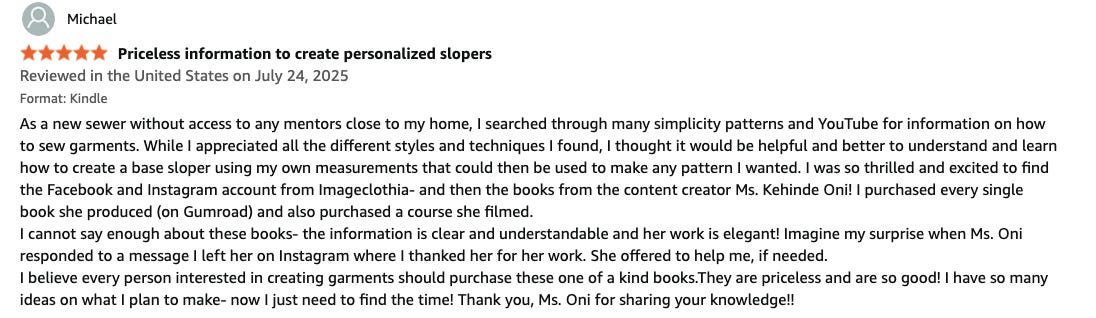
P.S. - Still not sure? Here’s what readers have said about The Basic Pattern Set:

The book is straightforward, practical, and focused on what actually matters: teaching you to draft blocks that fit your body. No fluff. No complicated jargon. Just clear instructions with alphabetical labeling that makes sense whether you’re drafting on paper or in Seamly2D.
The alphabetcal system compatibility with Seamly2D is such a smart unintentional win. Most pattern drafting books force you to translate labels when going digital but having A B C match up direcly removes a whole layer of friction. I've seen beginers get lost just trying to map tutorial steps to software and this solves that completley.
My honest reaction to this is why isn't it double the price already?!?